CHAPTER 11 / The cross & the burial
Stay near
JERUSALEM · GOLGOTHA
Some chapters ask us to move slowly. The story reaches betrayal, judgment, violence, and death. There are people who watch from a distance, and people who remain close. We can read without turning suffering into spectacle.
Power and judgment
The Gospel accounts describe Jesus being brought before religious authorities and the Roman governor Pontius Pilate. Crucifixion is carried out under Roman authority. These accounts must never be used to assign collective blame to Jewish people; Jesus and his earliest followers were themselves Jewish.
 PAUSE. LOOK A LITTLE CLOSER.
The people who remain
John places Jesus’ mother and the beloved disciple near the cross. Other accounts name women watching. Each Gospel preserves its own words and details. Read them separately as well as together, with care for their different emphases.
THERE IS NO NEED TO HURRY.
A borrowed tomb
Joseph of Arimathea asks for Jesus’ body. Burial brings a pause to the action. The people in the story must live through this loss before they know what comes next. There is room here for the reader’s grief, too.
Open the biblical account +
Luke 22–23; John 18–19; Mark 14–15
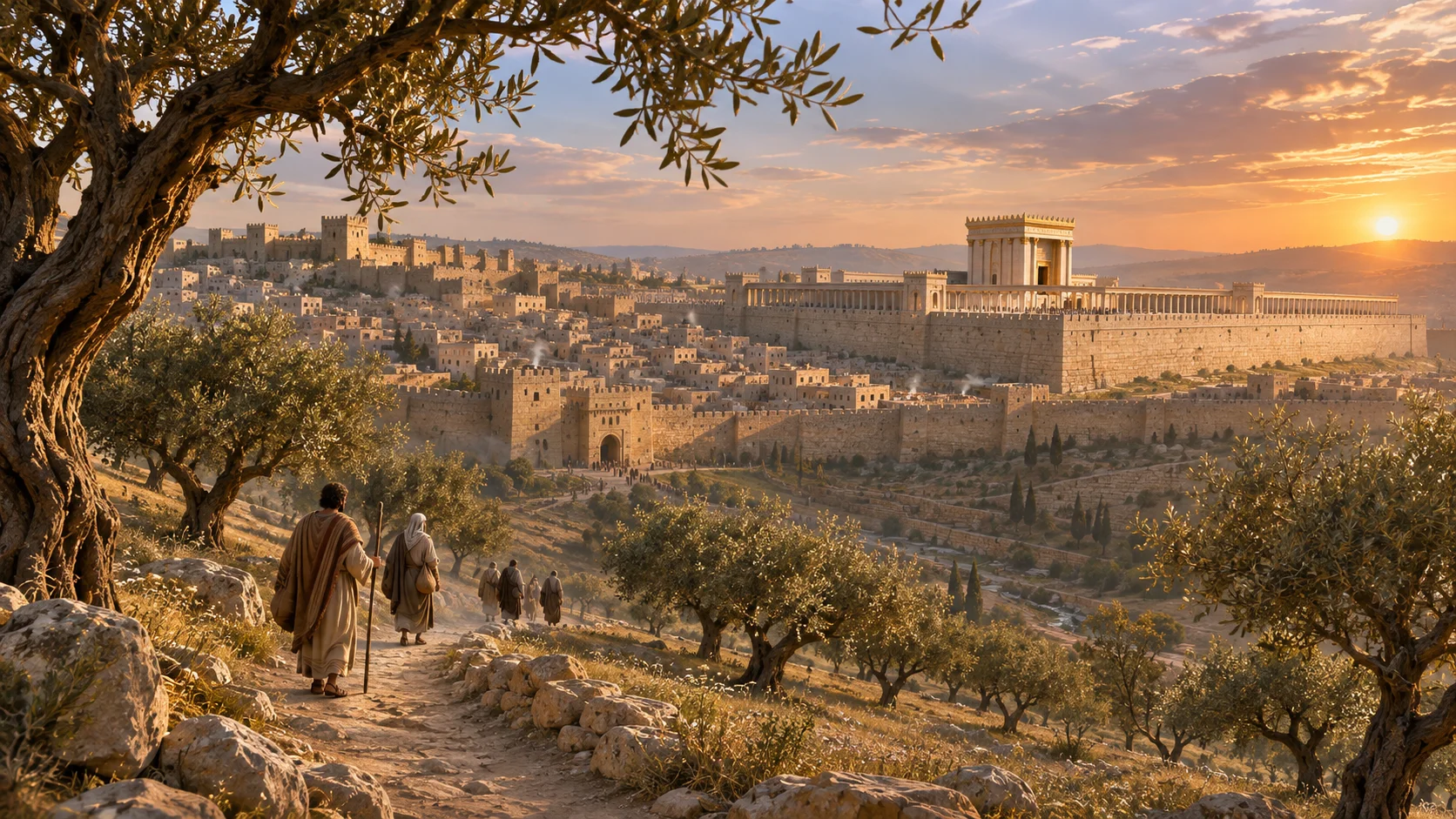
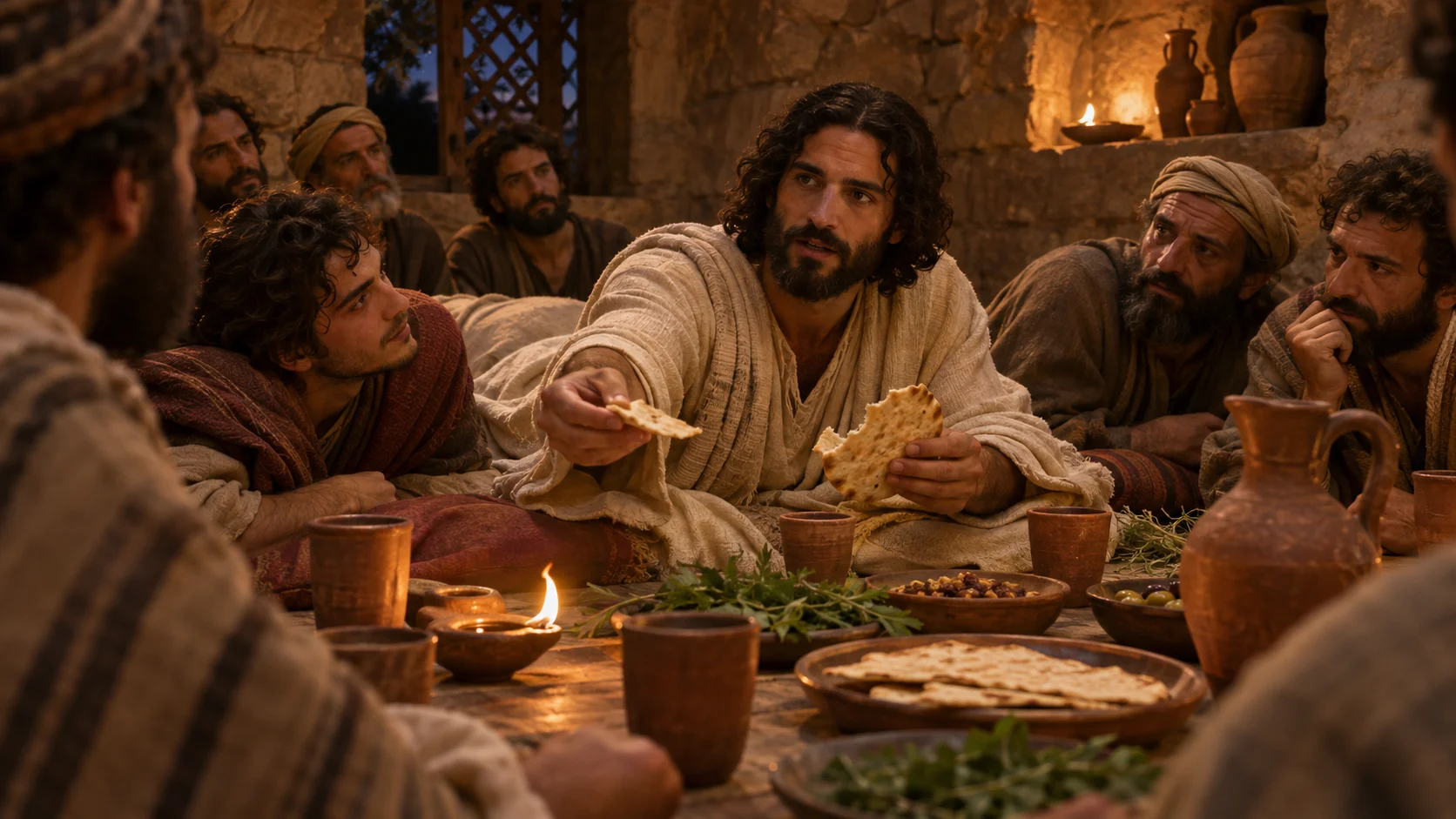
Read the source in the World English Bible. The surrounding narrative and reflections are original writing; all imagery is an artistic reconstruction.
Read in the New Testament ↗Sources: Luke 22–23; John 18–19; Mark 14–15. The sensory introductions invite you to imagine the setting; they are not eyewitness testimony. Scene details, faces, and depictions are imagined. Chapter order is an editorial reading path, not a claim to a certain chronology.
CARRY THIS WITH YOU
Who needs someone willing to remain beside them in grief?
God, be near to everyone living through loss. Give us the tenderness to remain, the courage to ask for help, and the patience to mourn.
More room to pray ↗CONTINUE THE JOURNEY / 12